
BASF: 95‑t plate falling‑film evaporator arrives at Ludwigshafen
- 95-t, 16-m plate falling-film evaporator designed by GIG Karasek has been delivered to BASF Ludwigshafen and is being installed at the steam cracker site.
- Heat pump will use waste heat from a steam cracker and renewable electricity to produce ~500,000 t/year CO2-free steam (~50 MW), primarily for formic acid production.
- Project will avoid about 100,000 t CO2/year for formic acid (up to 98% of process emissions) with commissioning planned mid-2027.
- German Federal Ministry for Economic Affairs and Energy supports the project with up to €310 million via the Carbon Contracts for Difference program.
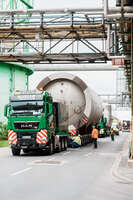
Delivery and installation
A 95‑ton, roughly 16‑meter plate falling‑film evaporator built for the heat pump was shipped from Schwedt on the Oder to BASF’s Ludwigshafen port and moved by heavy‑haul truck to the steam cracker construction site; the unit was designed by GIG Karasek and is now being installed.
Heat pump function and output
The heat pump will use waste heat from one of the site's steam crackers together with renewable electricity to produce up to 500,000 tonnes per year of CO2‑free steam, delivering about 50 MW of thermal output; the falling‑film evaporator generates oxygen‑free process steam that is fed into the site‑wide Verbund network.
Use and emissions impact
The steam will be used primarily for formic acid production, enabling avoidance of up to 98% of annual process emissions for that production — roughly 100,000 tonnes of CO2 per year.
Construction status, timeline and funding
Building infrastructure including the plant hall and switchgear is completed and most piping to the steam cracker is in place; commissioning is planned for mid‑2027, and the German Federal Ministry for Economic Affairs and Energy is supporting the project with up to €310 million under the Carbon Contracts for Difference program.
Source: BASF