
Asahi Kasei wins Tanahashi Prize for 10 MW alkaline electrolyzer durability
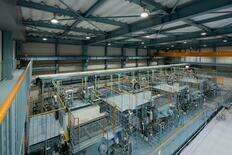
- 10 MW alkaline-water electrolysis pilot in Namie has operated since March 2020 under NEDO funding to validate long-term stability and efficiency
- A Kawasaki pilot launched in March 2024 runs four 0.8 MW modules in parallel with commercial-size cells to test durability, response to PV/wind power fluctuations, and frequent start-stop operation
- Demonstrations have supplied nearby hydrogen stations and supported a Green Innovation Fund-backed green ammonia project with JGC, informing plans to commercialize water electrolysis systems exceeding 100 MW by coupling multiple 10 MW modules
Award
Six Asahi Kasei engineers received the Tanahashi Prize (Electrochemical Society of Japan) for developing and operating an alkaline-water electrolysis system for large-scale clean hydrogen; the award ceremony was held in Tokyo on March 18, 2026.
Pilot plants
A 10 MW pilot in Namie has operated since March 2020 under NEDO funding to validate long-term stability and efficiency; a Kawasaki pilot launched in March 2024 runs four 0.8 MW modules in parallel using commercial-size cells and membranes to test durability, response to PV/wind fluctuations, and frequent start-stop cycles.
Demonstrations and applications
The pilot plants have demonstrated long-term stable operation, supplied nearby hydrogen stations, and supported a Green Innovation Fund–backed green ammonia project with JGC, providing operational data under real-world conditions.
Scale-up and engineering focus
Asahi Kasei intends to commercialize systems exceeding 100 MW by coupling multiple 10 MW modules and using demonstration data to lower commercialization risk; laureates noted the work built on established electrolysis experience and on-site engineering from design through commissioning.
Source: Asahi Kasei