
Toray develops durable hydrophilic coating for silicone medical devices
- Wettability of silicone hydrogels improved by more than 20× versus uncoated surfaces.
- Coefficient of friction decreased by approximately 90% after coating.
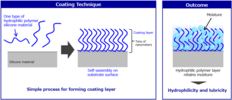
- A nanometer-scale coating (~20 nm) is formed by contacting the polymer with silicone hydrogel and applying heat via a self-assembly process.
- Target applications include contact lenses, stents and catheters — the coating also suppresses biological-substance adhesion and is durable after rubbing.
Innovation
Toray developed a hydrophilic polymer coating that increases the wettability of silicone materials by more than 20 times and reduces the coefficient of friction by approximately 90%.
Technology
The polymer was created using proprietary molecular design and precision polymerization and has a high affinity for silicone. Its self-assembly properties enable formation of a highly durable, nanometer-scale hydrophilic layer on silicone surfaces.
Performance and durability
By bringing the hydrophilic polymer into contact with a commercially available hydrophilic silicone hydrogel and applying heat, Toray forms an approximately 20 nm coating that imparts hydrophilicity while minimizing impact on the silicone’s inherent physical properties. Wettability (measured as the time to break a liquid film from a phosphate-buffered solution) improved by more than 20× versus uncoated surfaces, the coefficient of friction fell by about 90%, and the coating showed high durability after rubbing.
Applications and evidence
Applying the coating to contact lenses is expected to improve comfort during extended wear. On silicone elastomers the coating suppresses adhesion of biological substances, and its use on stents and catheters is anticipated to reduce blockage and improve maneuverability; the suppression of biological adhesion is supported by a cited porcine model study (RJ Cho et al., 2022).
Source: Toray