
Indaver opens Rivenhall IWMF, its largest Energy‑from‑Waste plant
- Processes up to 595,000 tonnes/year of non‑recyclable household and commercial waste.
- Generates enough electricity for about 125,700 homes and is exporting to the grid while ramping up.
- Total investment €680 million (≈£589 million); 4½‑year construction started in 2021 with up to 850 people and >3 million working hours.
- Planning permission exists for 40 hectares of low‑carbon greenhouses to use ~90% of heat and 100% of electricity and CO₂ from the site.
Operations and capacity
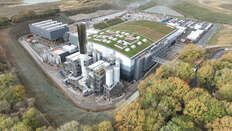
The Rivenhall Integrated Waste Management Facility is now accepting and processing waste and exporting electricity to the grid as it ramps to full operation. The Energy‑from‑Waste plant will treat up to 595,000 tonnes of non‑recyclable household and commercial waste each year and generate enough electricity for approximately 125,700 homes.
Project delivery and investment
Construction ran for 4½ years from 2021, involved up to 850 people on site and contributed more than three million working hours. The total investment amounts to €680 million (≈£589 million).
Circular economy and future plans
The plant is intended as part of a wider circular ecosystem: recovering energy and materials from residual waste, exploring additional bottom‑ash recovery for metals and critical raw materials, and integrating outputs with local industry. A proposed adjacent greenhouse development has planning permission for 40 hectares of low‑carbon greenhouses that could source about 90% of their heat and 100% of their electricity and CO₂ from the facility.
Local impact, heritage and environment
Rivenhall has created local jobs, built community engagement and visitor facilities, and includes restoration of 17th‑century Woodhouse Farm and Brewhouse buildings for offices and a visitor centre. Built largely below ground in a former quarry, the site incorporates biodiversity measures and habitat enhancements to protect woodland, ponds and species such as bats and great crested newts.
Source: Indaver