
Messer 2025 sustainability report — 2% GHG reduction
- Reduced market‑based GHG emissions in its own operations by 2% year‑over‑year in 2025.
- Procured renewable electricity and installed solar at sites across Asia, Europe and the Americas.
- Invested in air separation unit technologies including waste heat recovery and advanced compressors and control systems.
- Has developed ZeCarb carbon‑management services and obtained limited independent assurance for its double materiality assessment and selected non‑financial KPIs.
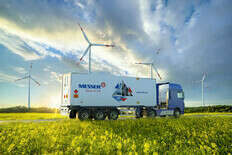
Operational improvements and emissions
In 2025 Messer advanced initiatives that improved energy use and operational efficiency, achieving a 2% year‑on‑year reduction in market‑based greenhouse gas emissions in its own operations. Measures cited include renewable electricity procurement, solar installations at sites in Asia, Europe and the Americas, and investments in air separation unit technologies such as waste heat recovery and state‑of‑the‑art compressor and control systems.
Products and services for decarbonisation
Messer’s industrial gases and application technologies support customer decarbonisation through offerings such as clean hydrogen, oxy‑fuel combustion technologies to reduce fuel use and GHGs in high‑temperature processes, and wastewater treatment using industrial gases. The company has developed a ZeCarb portfolio for capture, utilization and storage of industrial exhaust gases.
Safety and people
Safety culture and employee development remain central to Messer’s sustainability strategy, with engagement and training programmes including an annual Safety Day. Messer also maintains clear safety standards and offers tailored safety programmes for customers and partners to support safe interactions and operations.
Reporting, assurance and governance
Messer has published voluntary sustainability reports since 2014; the 2025 report documents how sustainability is embedded in the business and details progress toward alignment with the European Sustainability Reporting Standards (ESRS). The company obtained independent limited assurance for its double materiality assessment and selected non‑financial key performance indicators and highlights governance priorities such as ethical business practices, compliance and cybersecurity.
Source: Messer