
Eastman’s Kingsport methanolysis plant hosts EPA officials
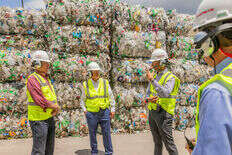
- EPA Principal Deputy Assistant Administrator Steven Cook and Regional Administrator Kevin McOmber visited Eastman’s Kingsport manufacturing site.
- The methanolysis plant can process more than 250 million pounds of plastic waste annually.
- Methanolysis breaks down hard-to-recycle polyester to the molecular level and yields approximately 20–30% fewer greenhouse gas emissions than traditional fossil-based plastic production.
- Officials also viewed mixed plastics processing, sorting and control rooms and discussed public–private collaboration to scale recycling solutions.
Visit overview
EPA Principal Deputy Assistant Administrator Steven Cook and Regional Administrator Kevin McOmber visited Eastman’s Kingsport manufacturing site to tour the company’s methanolysis recycling facility and meet site staff.
Technology and capacity
The methanolysis plant can process more than 250 million pounds of plastic waste annually, breaking down hard-to-recycle polyester to the molecular level to create new materials. Eastman reports the process delivers approximately 20–30% fewer greenhouse gas emissions than traditional fossil-based plastic production. Officials also observed the site’s mixed plastics processing, sorting and control rooms.
Policy and collaboration
Cook and McOmber discussed the role of advanced recycling in strengthening domestic recycling infrastructure, reducing dependence on foreign raw materials, and supporting American manufacturing. Cook said innovation and public–private collaboration are important to advance practical, scalable solutions; McOmber highlighted the technology’s potential to keep plastic waste out of landfills, increase demand for recycled products, and create high-quality manufacturing jobs in the region.
Company perspective
Eastman highlighted its long-standing Kingsport operations and said continued investment, backed by strong policy, can accelerate broader adoption of next-generation recycling solutions. Steve Crawford described the technology as converting hard-to-recycle waste into valuable new material while supporting U.S. manufacturing and sustainability objectives.
Source: Eastman