
Eni Enhances UK CCS Leadership with HyNet Expansion and New Government Initiatives
- The UK commits £20 billion to CCUS, targeting 20-30 million tonnes of CO2 storage annually by 2030.
- HyNet and Bacton hubs aim to store 500 million tonnes of CO2.
- The UK Government's "CCUS Vision" includes a Track-1 expansion process with applications due by 28 March 2024.
- HyNet's Phase 1 aims for 4.5 million tonnes of CO2 storage per year, expanding to 10 million annually.
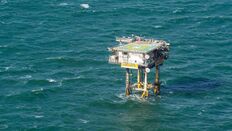
UK Government's CCUS Vision
The UK Department for Energy Security and Net Zero (DESNZ) has launched the "CCUS Vision" to establish a competitive carbon capture, usage, and storage (CCUS) market by 2035. This initiative includes the Track-1 expansion process at HyNet.
Investment and Job Creation
The UK has committed £20 billion to help the CCUS industry reach commercial scale, aiming to store 20-30 million tonnes of carbon dioxide annually by 2030. This investment is expected to create 50,000 new jobs.
HyNet and Bacton Hubs
Within this framework, the HyNet consortium, where Eni is the CO2 transport and storage operator, plays a significant role. Additionally, a second UK CCS hub, the Bacton Energy Hub, is planned to decarbonize the Thames Estuary region. Together, HyNet and Bacton have the capacity to store 500 million tonnes of CO2.
Track-1 Expansion
The UK Government's roadmap includes the Track-1 expansion of the HyNet CCUS industrial cluster, with businesses invited to apply by 28 March 2024. This expansion aims to add 1.3 to 1.5 million tonnes of CO2 per year to the existing 3.0 million tonnes secured by the five emitters already selected in Track-1, achieving full saturation of HyNet's Phase 1 by 2030.
Future Projections
HyNet is set to be among the world’s first low carbon clusters, with a storage capacity of approximately 4.5 million tonnes of CO2 per year in the first phase, expanding to about 10 million tonnes annually. Eni plans to leverage its expertise in storing gas in depleted fields to repurpose existing assets into carbon dioxide storage hubs, not only in the UK but also in Italy, Libya, and other regions.